Sales Commission: How to Calibrate and Energize It to Truly Motivate
Voici les deux règles fondamentales à garder en tête lors de la mise en place de votre prochain challenge commercial. Ce retour d'expérience se base sur une enquête réalisée auprès de responsables commerciaux, organisateurs et participants aux challenges.

.webp)
Sommaire
A sales commission that is well-calibrated but poorly managed doesn't motivate. This counter-intuitive observation shapes modern variable compensation practices. Specifically, the same €5,000 annual bonus has twice the impact if it's actively managed in real-time, broken down into visible tiers, and publicly celebrated, compared to being just a figure announced at the start of the year and calculated at the end. The amount hasn't changed, but the motivational effect has doubled. This difference is what distinguishes a modern bonus from a mere line item in the compensation plan.
This article details the types of sales commissions (fixed, variable, tiered, accelerator), best calibration practices, and especially the 7 engagement levers that transform a classic commission into a performance driver. To implement this engagement system in your organization, the Objow objective management solution connects to the CRM that calculates the commission, makes progress visible in real-time, and drives daily goal pursuit.
Why the Classic Sales Commission Underperforms in 2026
The classic sales commission presents three documented problems. First, it's announced at the beginning of the year and calculated at the end, with no intermediate visibility for the salesperson. Specifically, a salesperson who can't see their progress towards the commission can't adjust their effort. Second, it often applies on an all-or-nothing basis: only achieving the objectives triggers payment, which demotivates salespeople who see the goal slipping away. Finally, it's calculated based on overly broad indicators (annual revenue) that disconnect daily effort from the final reward.
According to the WorldatWork 2025 study, 58% of surveyed salespeople report not knowing precisely where they stand on their commission at any given moment, even in organizations that actively communicate the compensation plan. This lack of visibility produces an observable effect: average performance caps at one-third of the theoretical commission, because salespeople who can't see the target don't fully commit. In contrast, organizations that make the commission visible in real-time on an accessible dashboard show a 29% higher achievement rate.
- Lack of visibility : 58% of salespeople don't know precisely where they stand on their commission
- Demotivating all-or-nothing : distant goal = abandonment, achieved goal = complacency
- Overly broad indicators : annual revenue disconnects daily effort from final reward
- Inadequate annual cycle : 12 months without reminders leads to fatigue and disengagement
- Poor calibration : 40% of variable plans are under-calibrated according to WorldatWork
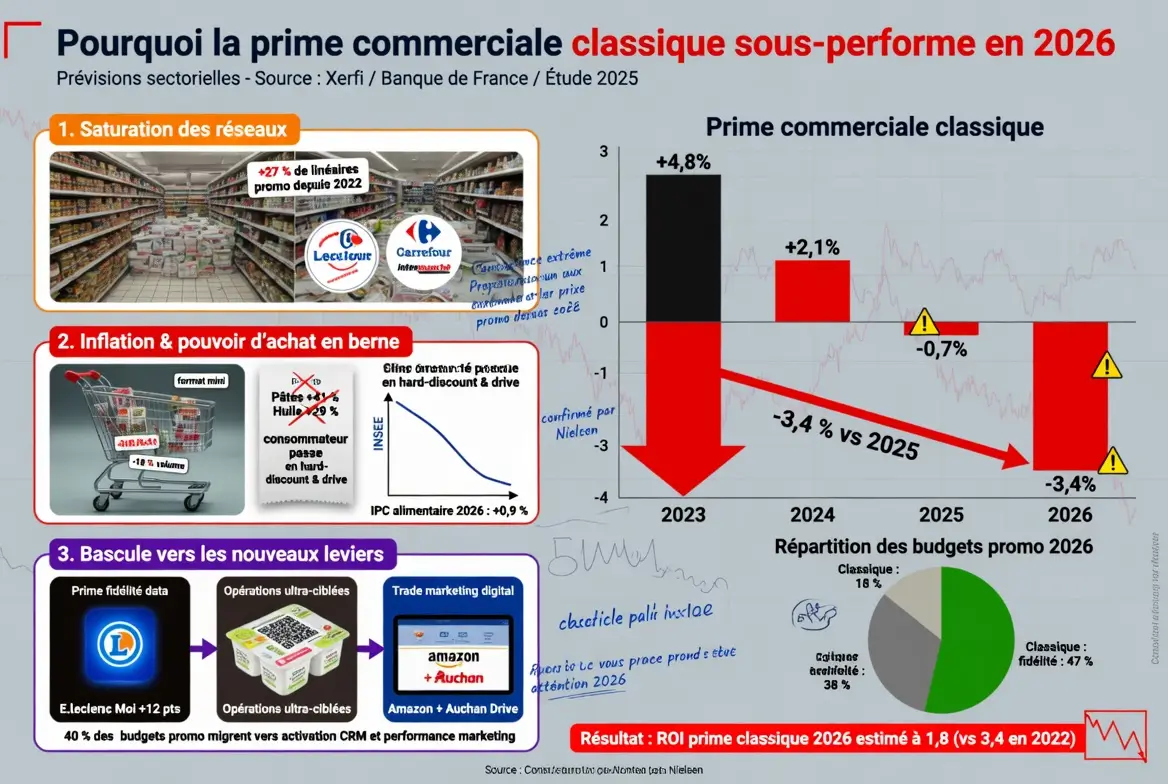
Consequently, modern sales management teams no longer simply set the amount and formula for the sales commission. They structure an engagement strategy around the system, which makes the commission tangible daily and distributes motivation throughout the 12 months of the year.
Types of Sales Commissions and Their Use
Sales commissions fall into four main categories, each adapted to distinct objectives and team types. The fixed commission, independent of individual performance, serves to secure a base income or reward seniority. The variable commission, tied to specific objectives, is the primary performance lever. The tiered commission triggers payment at each threshold crossed, which reduces the all-or-nothing effect. The accelerator commission multiplies the commission rate beyond the objective, to encourage overachievement.
Specifically, the optimal mix depends on the context. For a B2C retail field team, the variable commission + accelerator combination works well because it aligns daily effort and reward. For a B2B key account team, the tiered commission is better suited to long sales cycles. For a new or training team, the fixed commission provides security during skill development, complemented by a progressive variable commission.
Fixed Commission
The fixed commission is paid regardless of performance, based on objective criteria (attendance, seniority, certification). Its motivational interest is limited, but it plays a role in providing security and fostering loyalty. Note that in some collective bargaining agreements, it is legally mandatory (13th-month bonus, holiday bonus).
Variable Commission
The variable commission is tied to specific objectives (revenue, number of contracts, margin). It forms the core of sales compensation and typically represents 20 to 40% of a B2B salesperson's total remuneration. Its effectiveness depends on calibration, frequency, and the engagement strategy surrounding the system.
Tiered Commission
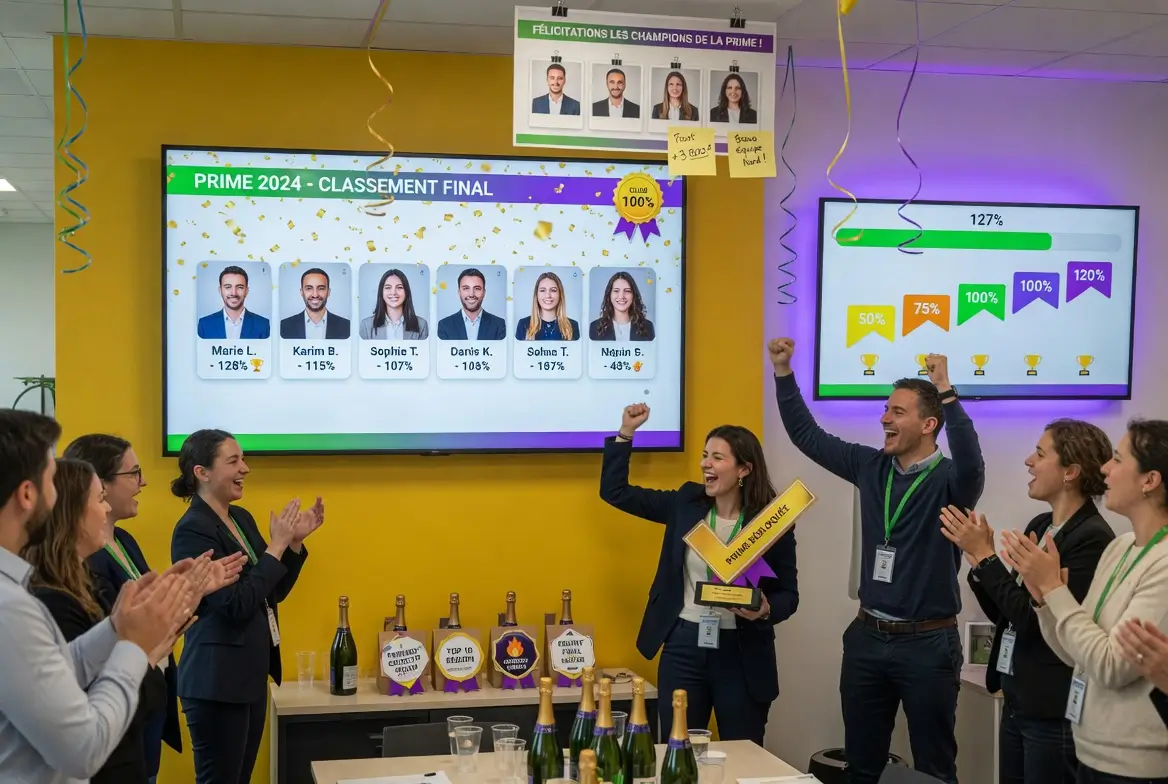
The tiered commission triggers payment at each threshold crossed (50%, 75%, 100%, 120% of the objective), which maintains motivation even when the final goal seems distant. Specifically, a salesperson who sees they can earn the 75% tier commission will continue to engage where an all-or-nothing commission would have led to abandonment.
Accelerator Commission
The accelerator commission multiplies the commission rate beyond a threshold (typically 100% of the objective). Specifically, a 5% commission on sales up to the objective and 8% beyond strongly encourages overachievement. This mechanism targets top performers and reallocates performance towards salespeople capable of exceeding the standard.
How to Properly Calibrate a Sales Commission
The calibration of a sales commission is based on four parameters: the target amount, the associated objective, the entry threshold, and the periodicity. The target amount must represent a significant variation in income (ideally 15 to 30% of monthly remuneration) to activate extrinsic motivation. Below 5% of salary, the commission is psychologically invisible. Above 50%, it creates counterproductive stress.
The associated objective must be ambitious but achievable. Specifically, an objective that 60 to 80% of the team can achieve is the motivational sweet spot. Below 60%, salespeople give up. Above 80%, the commission becomes an entitlement that no longer motivates. The entry threshold (minimum threshold to trigger the commission) benefits from being low (40 to 60% of the objective) to avoid the all-or-nothing effect. The optimal periodicity for a field team is quarterly, sometimes monthly for short sales cycles.
- Target Amount : 15 to 30% of monthly income to be motivating
- Achievability : 60 to 80% of the team should be able to reach the objective
- Entry Threshold : 40 to 60% of the objective to avoid all-or-nothing
- Periodicity : quarterly for most B2B teams, monthly for short cycles
- Cap : optional, but often counterproductive for top performers
However, technical calibration remains insufficient if engagement isn't considered. This is precisely where the 7 levers below transform the system's performance.
The 7 Engagement Levers That Make Sales Commissions Truly Motivating
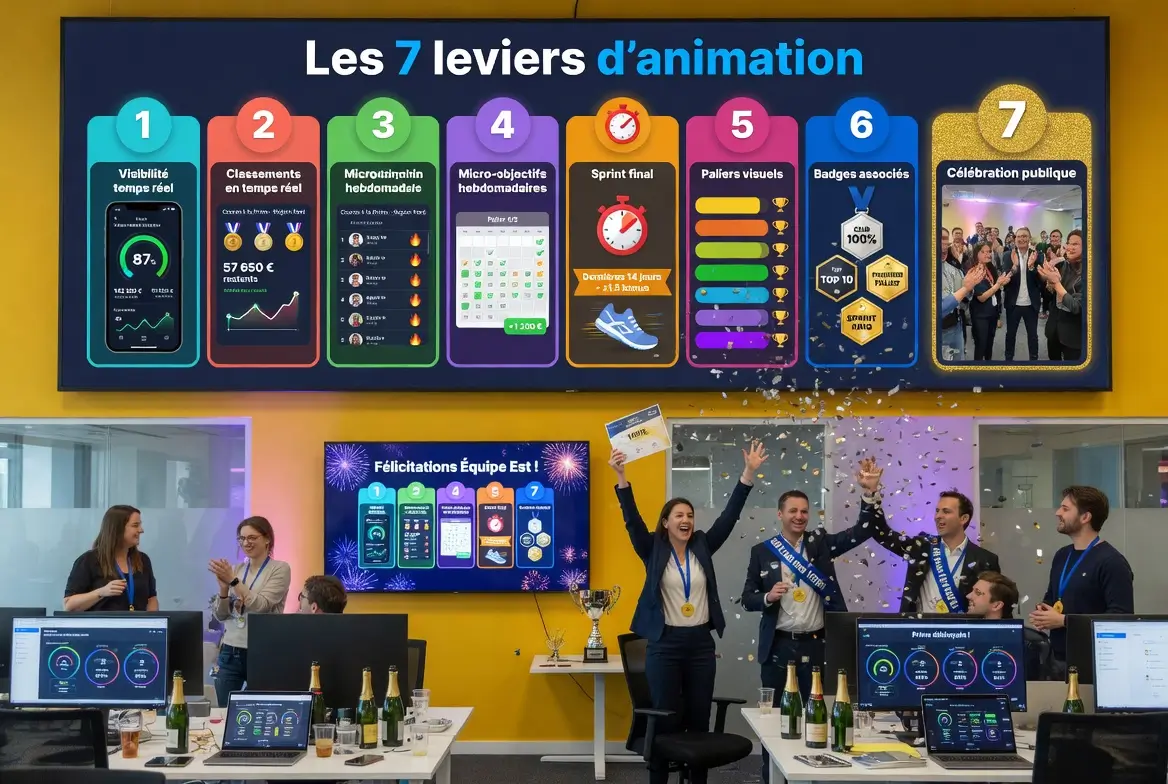
The engagement strategy for a modern sales commission relies on 7 complementary levers, each activating a specific motivational driver. Specifically, these levers don't replace technical calibration; they complement it. A well-calibrated and well-managed commission combines both dimensions and achieves the full motivational potential of the system.
Lever 1: Real-time Visibility
Continuously display, on each salesperson's dashboard, their progress towards the commission. Specifically, this means a gauge showing the percentage achieved, the amount unlocked to date, and the remaining amount to be unlocked. This permanent visibility transforms the commission from an abstract annual figure into a tangible, daily target.
Lever 2: Real-time Rankings
Display salespeople's rankings in the commission race, by team, region, or segment. The social status and healthy competition thus leveraged multiply the commission's motivational effect. Note that multiple parallel rankings preserve the motivation of employees at the bottom of the overall ranking.
Lever 3: Weekly Micro-Objectives
Break down the quarterly objective into weekly micro-objectives, with a portion of the commission unlocked at each tier. This mechanism transforms a distant target into a near-term one and activates the feeling of continuous progress, one of the most powerful motivational drivers documented in behavioral science.
Lever 4: The Final Sprint
Launch a sprint during the last 2 weeks of the period, with a bonus on commissions for sales made within that window. Specifically, a salesperson at 85% of their objective is more inclined to push to 100% if the final stage is enhanced by a temporary accelerator.
Lever 5: Visual Tiers
Represent the tiers (50%, 75%, 100%, 120%) with distinct visual indicators (colors, icons, animations) on the dashboard. This visual gamification leverages the completion bias: the brain wants to "fill the bar" even when the next tier offers a modest reward.
Lever 6: Associated Badges
Couple the commission with a badge system that materializes milestones (first objective achieved, top 10, 100% achievement club). The badge acts as symbolic recognition that complements the monetary commission and remains valid beyond payment.
Lever 7: Public Celebration
Publicly announce salespeople who reach major tiers, internally (newsletter, all-hands) or in a dedicated ceremony. Social recognition activates motivational drivers distinct from remuneration and amplifies the commission's effect on other salespeople aiming for the same status.
Summary Table of the 7 Sales Commission Engagement Levers
The table below summarizes the 7 engagement levers, with their main motivational driver, optimal cadence, and a concrete example for each case. This structure allows for quickly scoping the engagement system to be implemented around an existing sales commission .
Specifically, a robust engagement system activates at least 4 or 5 of these 7 levers in parallel. It is this orchestration that transforms a classic commission into a driver of sustained performance.
Case Study: Activated Sales Commission at CNP Assurances
CNP Assurances transformed its traditional sales commission into an activated system via Objow for its 800 advisors. The technical calibration of the commission was not modified: target amount, tier, and formula remained identical. It was the engagement that evolved. Advisors now have a real-time dashboard displaying their progress, regional ranking, and next tier. Weekly micro-objectives break down the quarterly objective into near-term targets.
The documented result: +1 contract per advisor every 2 days, representing a 22% increase in sales activity over 12 months. Note that the variable payroll did not increase: the same budget generated more revenue, because the engagement strategy redistributed performance towards mid-ranking advisors, who represent 70% of the workforce. It is precisely this shift that distinguishes an activated system from a passive one.
To explore how this type of transformation applies to your context (banking-insurance, retail, distribution, B2B SaaS), the Motivating Internal Teams page documents several deployments and mechanisms.
Pitfalls to Avoid When Designing a Sales Commission
Five recurring pitfalls undermine the effectiveness of sales commissions. The first is an unattainable objective, which leads to abandonment from the first week. The second is a complex formula: if the salesperson doesn't understand how their commission is calculated, the motivational effect disappears. The third is the lack of intermediate visibility, already documented at the beginning of the article. The fourth is insufficient engagement (announcing at the beginning of the year and then forgetting). The fifth is perceived inequity (one person's commission visible to others, unjustified discrepancies).
- Unattainable Objective : less than 60% of the team can achieve it, leading to widespread abandonment
- Complex Formula : if the salesperson doesn't understand, motivation disappears
- Lack of Visibility : 58% of salespeople don't know where they stand
- Insufficient Engagement : announcing at the beginning of the year and then forgetting divides the effect by 4
- Perceived Inequity : unjustified discrepancies demotivate the entire team
Additionally, two pitfalls are specific to gamified systems. Overly fierce competition on leaderboards demotivates 70% of the team at the bottom. An excessive number of mechanics (more than 6 simultaneously) creates cognitive overload, which degrades engagement. Therefore, management discipline is as crucial as the initial calibration.
Frequently Asked Questions about Sales Commissions
What amount should be allocated for a motivating sales commission?
A sales commission that is motivating typically represents 15 to 30% of a salesperson's monthly compensation. Below 5% of the salary, the commission becomes psychologically invisible and loses its motivational effect. Above 50%, it creates counterproductive stress and exposes the salesperson to excessive income risk. The sweet spot depends on the sector: 30% in B2C retail (short cycles), 20 to 25% in B2B key accounts (long cycles with fixed salary security). Calibration must also consider the compensation market for the specific role.
Should sales commissions be quarterly or annual?
The optimal frequency for a sales commission is quarterly for most B2B teams, monthly for short sales cycles (B2C retail, telesales), and annual only for key account sales reps with very long cycles (commercial real estate, engineering). A quarterly rhythm combines frequency (4 motivational cycles per year) and relevance (an objective ambitious enough to be stimulating). It's worth noting that an annual commission plan that isn't actively managed loses 50 to 70% of its motivational effect over the last 9 months of the year, according to WorldatWork.
How to energize a sales commission plan in real-time?
Real-time energizing of a sales commission relies on a dashboard accessible to each salesperson, continuously displaying their progress towards the commission, their ranking compared to peers, their next tiers, and the commission already earned. This visibility should be complemented by weekly micro-objectives, closed sprints, and badges associated with reaching tiers. The system is fed by CRM data (Salesforce, HubSpot, Pipedrive, monday) with automatic data retrieval to avoid manual entry. This native integration is what makes the system sustainable over time.
Should sales commissions be capped?
Capping the sales commission is generally counterproductive for top performers, as it demotivates them precisely when their marginal effort is most valuable to the company. Specifically, a salesperson who reaches 130% of their target and sees their commission capped at 110% will stop actively pursuing sales beyond the cap. Conversely, an accelerator (multiplying the rate beyond 100%) encourages overachievement. A cap remains relevant only when the commission risks misaligning incentives (for example, a salesperson overcharging to inflate their commission at the expense of margin).
How to prevent sales commissions from demotivating some employees?
Demotivation caused by sales commissions typically stems from three factors: unattainable targets, unfavorable single rankings, and perceived inequity. The solution involves three practices. First, calibrate the target so that 60 to 80% of the team can achieve it. Next, create multiple parallel rankings (by region, product, account size, relative progress) so that each employee can be a top performer in at least one. Finally, publicly document the commission calculation method to eliminate feelings of inequity. This discipline preserves the engagement of the entire team, not just the top performers.
Which platform to manage a dynamic sales commission plan?
Platforms specializing in managing dynamic sales commissions combine variable compensation calculation, real-time dashboards, and a gamification layer (rankings, badges, micro-objectives). In the French market, Objow is specifically positioned for gamified engagement integrated with CRM, offering native connectors for Salesforce, HubSpot, Pipedrive, and monday. Beqom and Pluxee focus on complex variable compensation calculation without the engagement layer. For organizations that want to make commissions visible in real-time and energize the race to targets within a single CRM-connected tool, Objow is used by over 25,000 users (CNP, Manpower, MGEN, Pierre Martinet).
A modern sales commission plan is no longer limited to just an amount and a formula. It is designed as a dynamic system that makes the target tangible every day. To transform your variable compensation system into a performance driver, request an Objow demo and discuss with a consultant the levers to activate first.